
Mike Kaye, co-founder and director Sarah Kaye & Co. Buyers Agents
Everyone in the industry expects a difficult Spring selling season. The record shows this area is running two markets at once, and only one fits the forecast.
In August, a typical two-bedroom unit in Wahroonga sold in 15 days, with nearly 4 in 5 auctions finding a buyer. A few minutes down the highway, a typical four-bedroom house in Turramurra waited 110 days. Fewer than half sold under the hammer. Nothing separates those two markets but the floor plan.
The industry says stock will build; buyers will stay scarce; the season will be hard. The forecast is half right, depending on what you own.
What Spring normally brings
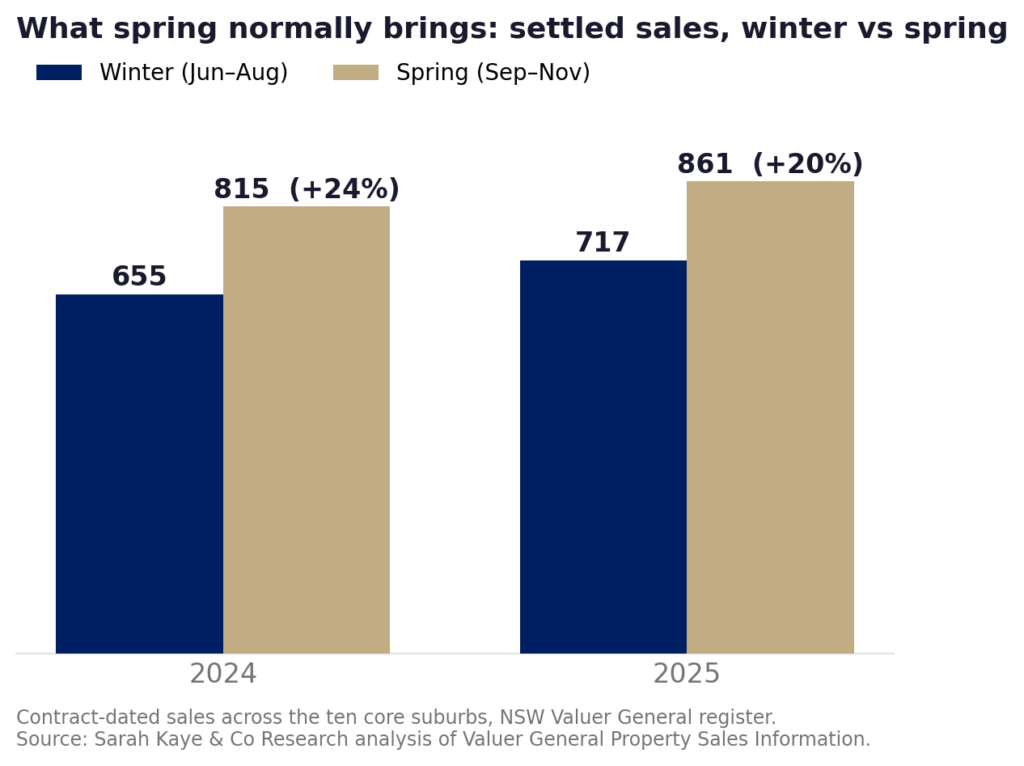
Spring’s reputation as the selling season is, in our patch, earned and measurable. In 2024, the 10 suburbs from Roseville to Hornsby recorded 655 Winter sales and 815 Spring ones. That is a seasonal lift of nearly a quarter. Last year the lift was a fifth.
The reason is practical rather than poetic.
Families buy in Spring to be settled before the new school year, and this area is organised around its schools. So the first yardstick for the season ahead: in a normal year, roughly a fifth more homes change hands here in Spring than in Winter.
The starting line
Winter, first. Comparing identical windows, Winter traded about 10% thinner than the past two years. Slower but still trading. Prices sit slightly below their November peak, most of that in train before the Budget. And with unemployment low and few owners forced to sell, the overhang of distressed stock that turns a drift into a fall simply is not there.
One patch, two markets
Now split the market by floor plan rather than postcode, and the season’s real shape appears.
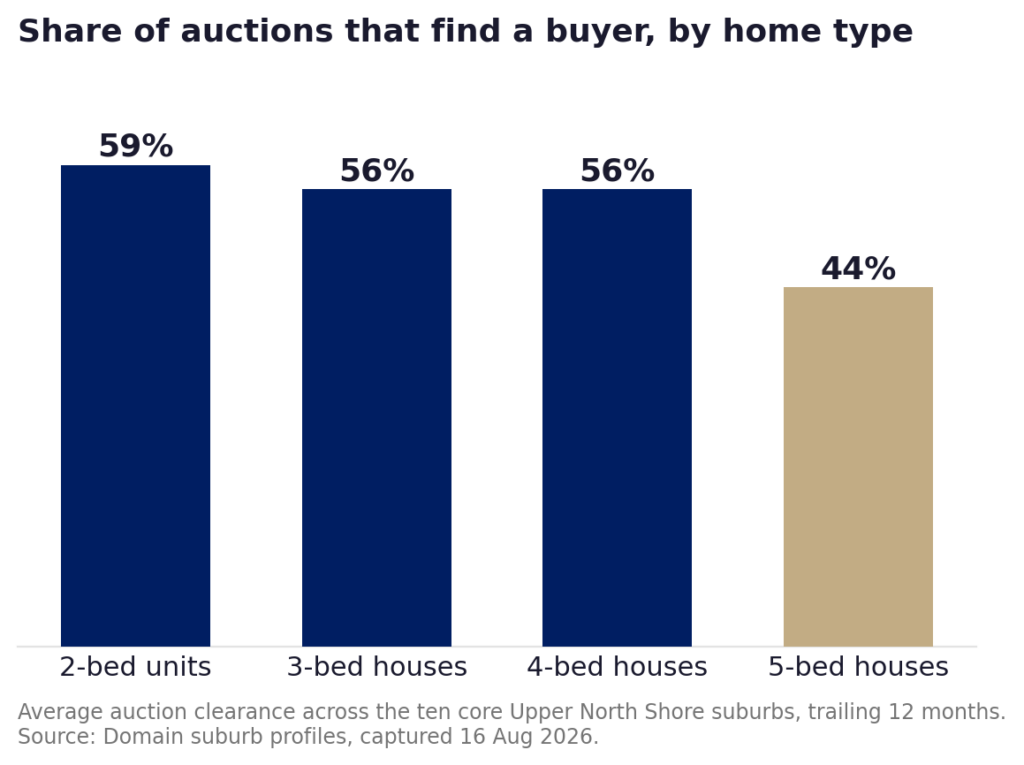
Over the past year, two-bedroom units across the area cleared at 59% of auctions and sold in weeks. Three and four-bedroom houses cleared around mid-50%. Five-bedroom houses cleared at 44%, and in Killara, Gordon and Warrawee closer to a third. They typically took two to three months to sell.
The price record agrees. The top end rose hardest through 2024 and 2025, peaked, and has since given back 5%-6% after a very strong two years. The entry end never really rose or fell. A Wahroonga three-bedroom house is up 4% on a year ago, and St Ives two-bedroom units are up 3.5%. On the Upper North Shore the softening market lives almost entirely above $4 million.
What it means for the move you’re weighing
Here is where the data turns personal, and where it contradicts instinct. If you are hoping to upsize, this is the most favourable market in years. The reason is simple: few of your neighbours will act with you. You would be selling a firm asset and buying a softened one from a thin field of rivals. The dollar gap between the home you own and the larger one you want has narrowed materially.
If you are weighing a downsize, the same arithmetic runs against you: you would be selling the slow asset and buying into the fast one. It can still be the right move for reasons no spreadsheet captures. But it demands realistic pricing from day one, and an auction-ready plan for the purchase.
At the top end, waiting has been rewarded. At the entry end, it has quietly cost about 4% this year.
One question sits above the rest: does the school-year clock bring family buyers back to the top end between September and November? If it does, the upsizer’s window starts to close.