
Mike Kaye, co-founder and director Sarah Kaye & Co. Buyers Agents
The papers spent September describing a reckoning. Sydney values are seven per cent off their February peak. Auctioneers count two bidders where there used to be seven. Readers of this column know we check that kind of headline against the register first. The register is the NSW Valuer General’s record of every settled sale in the state.
It runs a few weeks behind the market, but no agent or website can massage it. Last month we promised to report what winter actually did. The register has caught up, and this month we can do something new with it. We have followed the same homes through two sales. That shows what winter’s sellers actually got.
What winter sellers actually got
Take every home in our ten suburbs that sold this winter. Keep only the ones that had also sold between one and five years before, so we can compare the two prices. Drop the flips, the rebuilds and anything that was not an ordinary sale. What is left is the cleanest price test the register can give.
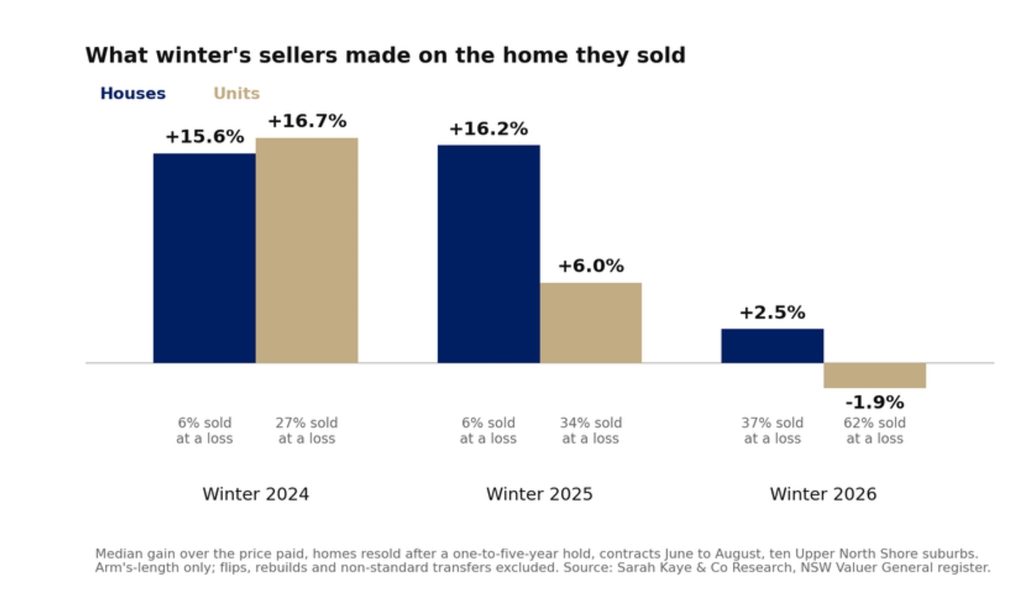
Last winter, the typical seller made 13 per cent on what they paid. The winter before, 16 per cent. This winter, nothing. Half of them sold for less than they paid. For houses, the typical gain fell from 16 per cent to 2.5 per cent. Roughly a third of house sellers took a loss, up from about one in sixteen. For units, three in five sellers took a loss.
The turn was quick. From January to May, sellers were still making eight per cent. From June it stopped. Winter also traded thin: 248 settled sales against 299 and 308 in the two winters before. Fewer homes sold, and the ones that did sold for no gain. That is where spring starts from.
Who can sell this spring
Unit owners are the least likely to list of all. So expect a spring with fewer homes for sale than the calendar suggests, sold mostly by people who have owned for a while.
The squeeze is in the middle
Now split the sellers by what they paid. Under $2.5 million, the typical gain barely changed: seven per cent last year, 6.6 this year. Over $4 million it eased from 14 per cent to 11.5, though few of those owners are selling at all. In between, from $2.5 million to $4 million, the gain fell from 14 per cent to 3. The share selling at a loss went from one in eight to four in nine. Sales in that band were also down 31 per cent on a normal winter, the biggest fall of any band.
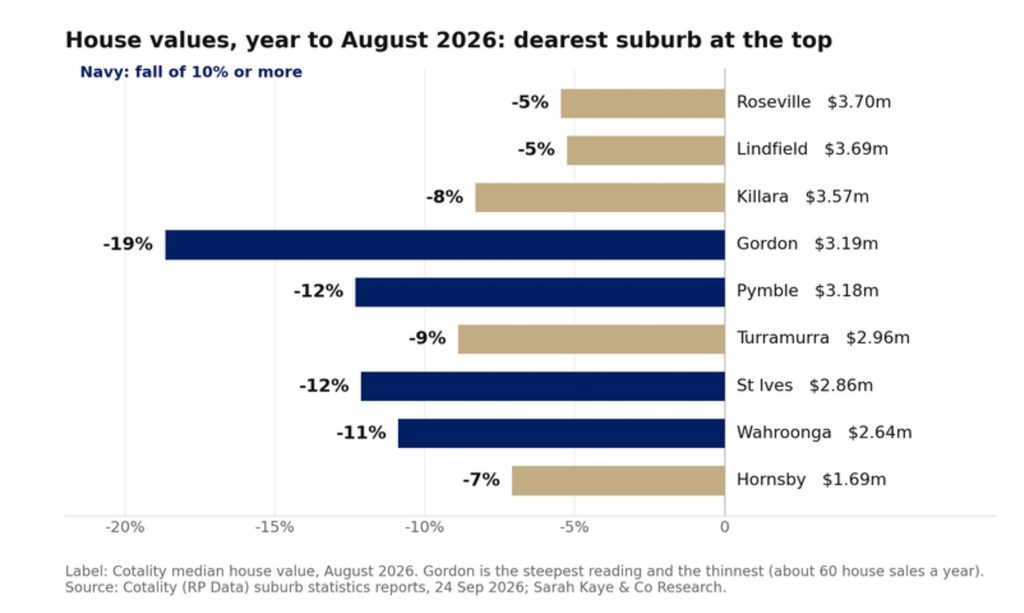
Cotality’s suburb figures point the same way.
The three dearest suburbs, Roseville, Lindfield and Killara, lost the least over the year: five to eight per cent. The next band down lost the most. Gordon is off 19 per cent on Cotality’s reading, Pymble and St Ives 12, Wahroonga 11. Houses in Ku-ring-gai took 32 days to sell for most of last year and 40 by June. Units did not slow. The reason is simple. People can only pay what they can borrow, and three rate rises hit the family with the big mortgage first.
Spring so far
The register cannot see spring yet. Last month we set an exam question: does the school-year clock bring family buyers back to the top end before Christmas? Too early to say. The tell is five-bedroom clearance through October, and we will report it either way. So here is spring’s test, on the record before the season can influence it. Winter’s sellers made nothing and half took a loss. If spring’s sellers do better than that, the season worked. The first reading comes in November.
The move you are weighing
The upsizer’s window is still open. Your apartment or three-bedroom house held its value through winter. The larger home you want did not. But a fourth rate rise is widely expected, and each one shrinks the loan that bridges the gap. If you are downsizing, the trade still runs against you. Most sellers here are choosing realism rather than being forced into it. Winter is in the book. Spring is on the clock, with a rate decision attached.