
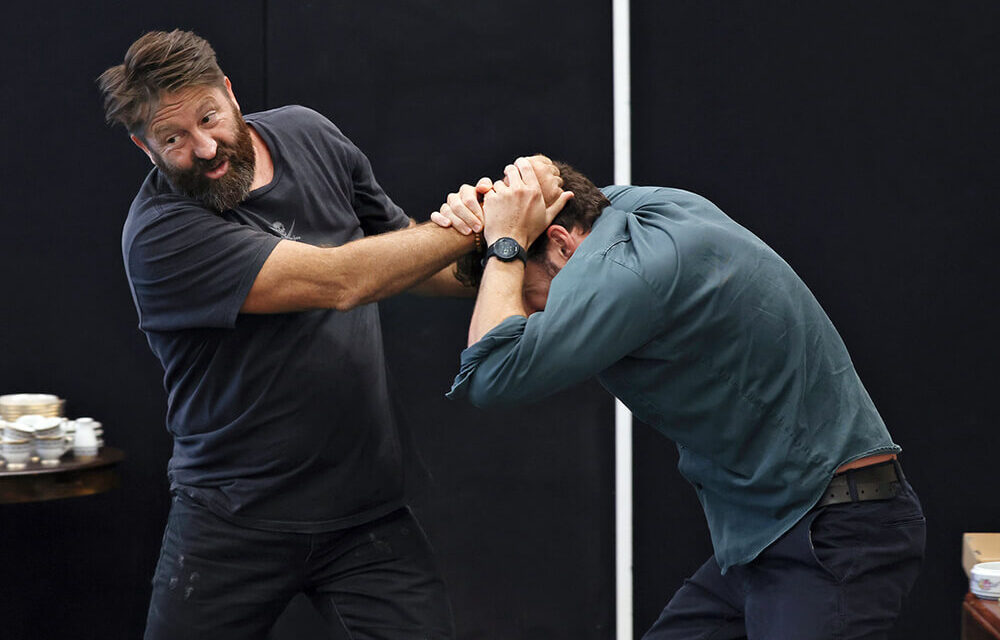
Natasha Ciesielski, Bacchus at the Theatre
“I feel invisible in a lot of productions. Part of me is grateful for that: when my work integrates so completely into the process that the storytelling feels seamless. But there’s also a part of the industry that still refuses to accept fight directing as a legitimate creative profession. I discreetly call myself the Invisible Man.”
Yet Nigel Poulton is anything but invisible, with a long list of productions, spanning opera, ballet, Shakespeare and contemporary theatre. His skill set transfers fluidly across mediums, from film sets to live performance, encompassing stunt work, fight direction, movement and intimacy coordination. An award-winning, internationally renowned fight, weapons and movement specialist, Poulton can list Pirates of the Caribbean, The Bourne Legacy, Sopranos, Boardwalk Empire and I Am Legend, among the film and television projects he’s worked on, alongside more than sixty theatre productions across twenty-five years of professional practice.
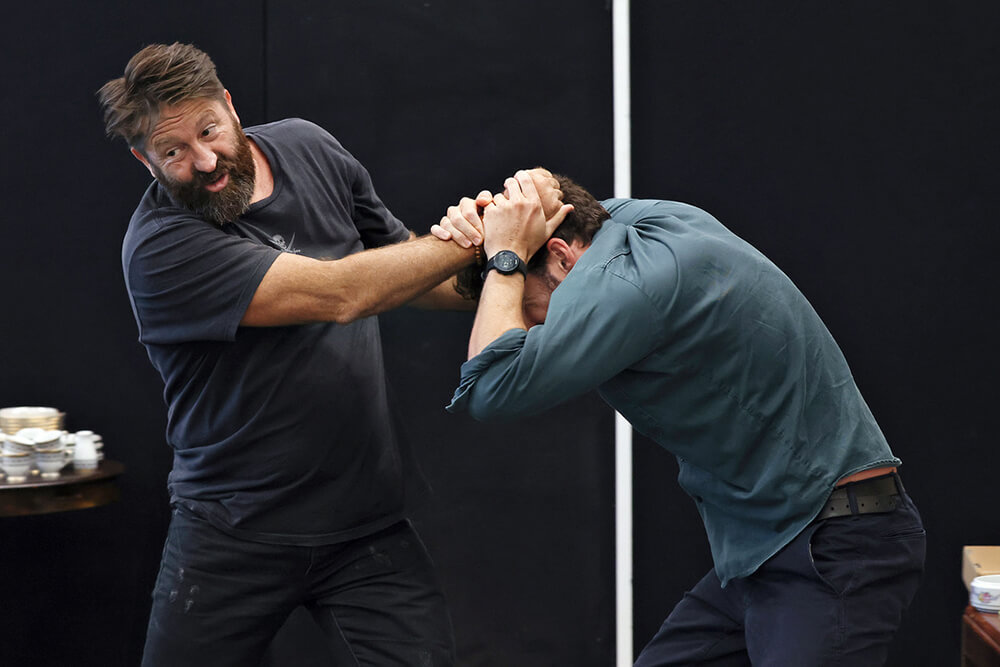
Poulton discovered his vocation at drama school, gravitating towards stage combat within the movement program. His first professional breakthrough came in the early 2000s on Hamlet, working with John Bell. Through Shakespeare, Poulton developed a deep engagement with weapon work and sword play, crediting Bell Shakespeare as a formative influence on his practice.
Intimacy guidance was part of Poulton’s remit long before the role was formally recognised in Australia. “As the movement person, you’re being asked to shape those moments in a production.” What began as a curiosity shifted after meeting Alicia Rodis, founder of Intimacy Directors and Coordinators (IDC). The pair had crossed paths for years through the stage combat and stunt community in New York. Poulton trained with Rodis, shadowing her on film sets, before returning to Australia as one of the first certified intimacy coordinators in the country.
Much of his early work involved establishing protocols for intimacy practice, teaching at institutions including NIDA and AFTRS, and embedding consent-based frameworks into the theatre industry. While intimacy direction remains a relatively new formalised discipline in theatre, Poulton has observed a significant shift in attitudes, largely driven by younger actors who now expect intimacy coordinators to be on set.
Poulton challenges the misconception is that intimacy coordinators hinder the creative process by imposing overly rigorous structures. “Choreography provides opportunities for artists to express themselves. The structure gives the actors certainty around what is going to happen and helps to take out anxiety.”
“My role is about providing protocols and practices to help actors get around the work, manage the work,” he says. “It’s also about creating pathways so they can access proper professional help if they need it.”
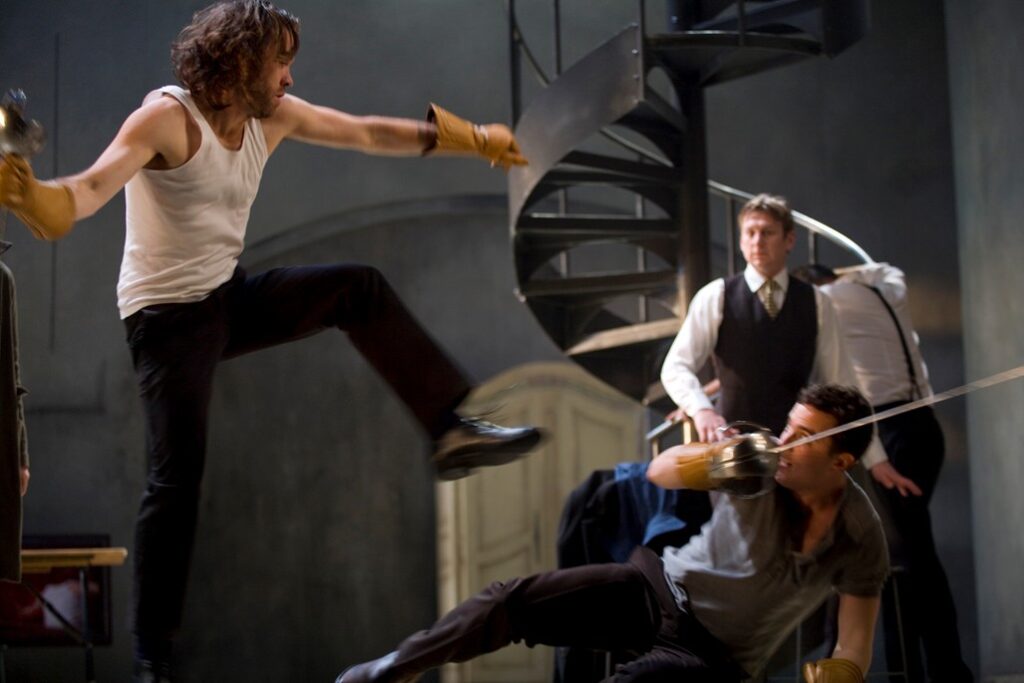
A fight director, Poulton explains, is far more than a choreographer of violence. The role is one of creative collaboration, shaping movement, emotion and physical storytelling in a way that supports character and narrative. “How are we representing this violence? What is the story we are trying to tell? What’s the emotional toll on the actor? How do we take care of them so that they can feel safe taking the character going down dark pathways?”
“I love it when we don’t hold back but it has to be for a good reason,” he continues. “The playwright has included that moment in the text for a reason, it feeds the greater story. I’m not interested in gratuitous violence, but if you don’t show the dark side of human behaviour, then how do we know what it is.”
Violence, Poulton emphasises, is both psychological and physical. His work carefully balances both sides to ensure movement is grounded in story and character rather than spectacle.“It always comes back to the question: what’s the story we are trying to tell? Are we meeting the objectives we’ve set? It’s an analytical process, constantly checking how the fight beat sits within the larger structure of the play. It’s a process of continual check-ins and refinements.”
He notes that fight directing continues to evolve as people are exposed to more violence and depictions of violence. “Through social media people are seeing real violence. Part of my edge comes from working in security industry; I bring a real-world understanding of how violence manifests, and how people behave in those situations. People are more informed now, which raises the level of conversation. That’s a positive thing — with caveats.”
Poulton has recently wrapped work as Fight Coordinator on a US-Australian feature film The Mark, directed by Justin Chadwick and starring Jessica Alba and Tom Hopper, and is preparing to step into a new creative role as director on Antigone La Boite (Melbourne).
When Poulton’s projects wrap, his work disappears into the narrative. And while he may still describe himself as the Invisible Man, his influence is increasingly visible.