Kim Sparkes
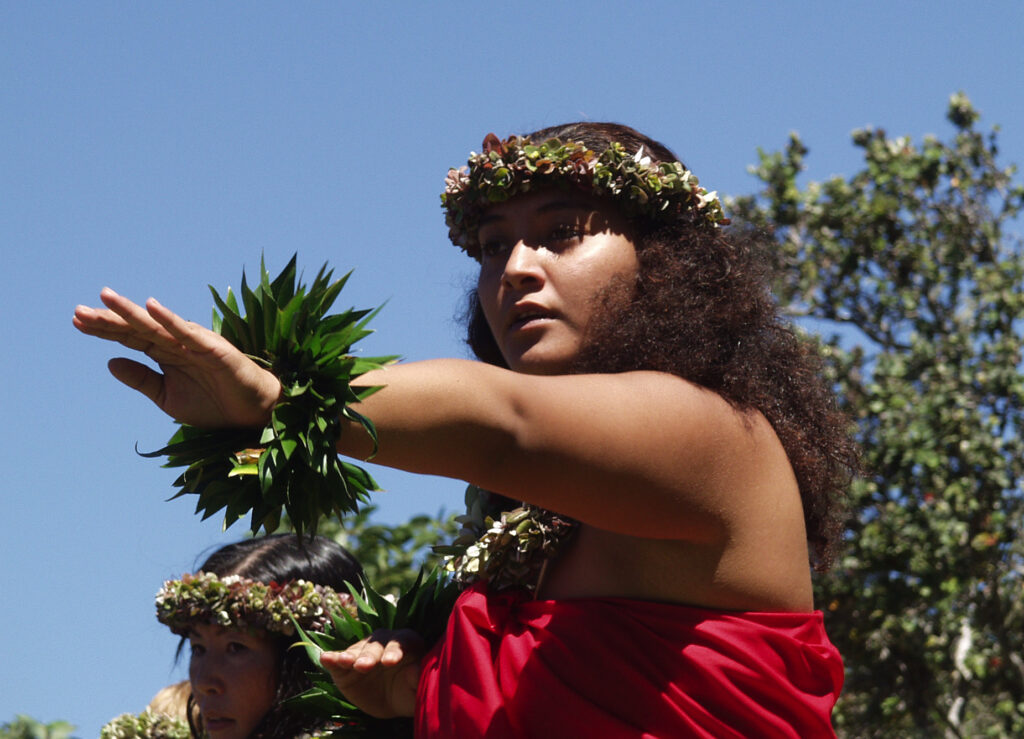
For me and many Hawaiian tourists, an understanding of the hula has been influenced by Hollywood, featuring nubile women, flower crowns, swaying and shaking hips, flailing arms, grass skirts, colourful lei and shell-top coconut bras, courtesy of films such as Waikiki Wedding (1937), Blue Hawaii (1961), and Girls, Girls, Girls (1962). A visit to the Kauai Museum (Kauai) and the Bishop Museum (Oahu) has changed my perspective.
Hula has its roots in ancient Hawaiian mythology. According to one legend, Laka, goddess of the forest, had given Hi’iaka, sister of Pele, goddess of volcanos and fire, the gift to understand the language and stories of the forest. As Hi’iaka listened to the swaying and creaking of tree branches, the murmur of streams, the melody of the wind, the flitter of birds and tumbling of stones down waterfalls, she put these stories into movement with hands and body. This was the first known hula.
Ancient Hula is an indigenous Hawaiian form of communication using song (chants) and dance (movement). Prior to the 1800s, Hawaiians did not have a written language, so hula was an oral history that told stories of legends, culture, values, worship and events.
The dancers were men and women, however only men were musicians and used drums made from coconut tree trunks with shark skin over the top, feather-decorated hollow gourds, bamboo sticks and pebble castanets.
Hula was changed by contact with the Western world. Captain James Cook was the first European to land in Hawaii and document the hula. In 1830, influenced by Christian missionaries, Queen Regent Ka’ahumanu banned the hula by royal decree until King David Kalakaua, known as the Merrie Monarch, proclaimed hula as “the language of the heart, and therefore the heartbeat of the Hawaiian people”.
Festivals were held reviving the hula, with the Merrie Monarch Festival’s hula competition – the Olympics of hula – hosted annually in Hawaii since 1971. The 1970s saw a resurgence in Hawaiian culture and the state constitution was amended to include hula in schools.
Over time, Hawaiian music and dance adopted and adapted native and foreign elements. Ukuleles, steel guitars and pianos are used and the hula, both ancient and modern, continues to thrive. Today, thousands of students learn the hula and it thrives as a powerful manifestation of the cultural continuity of the Hawaiian people.
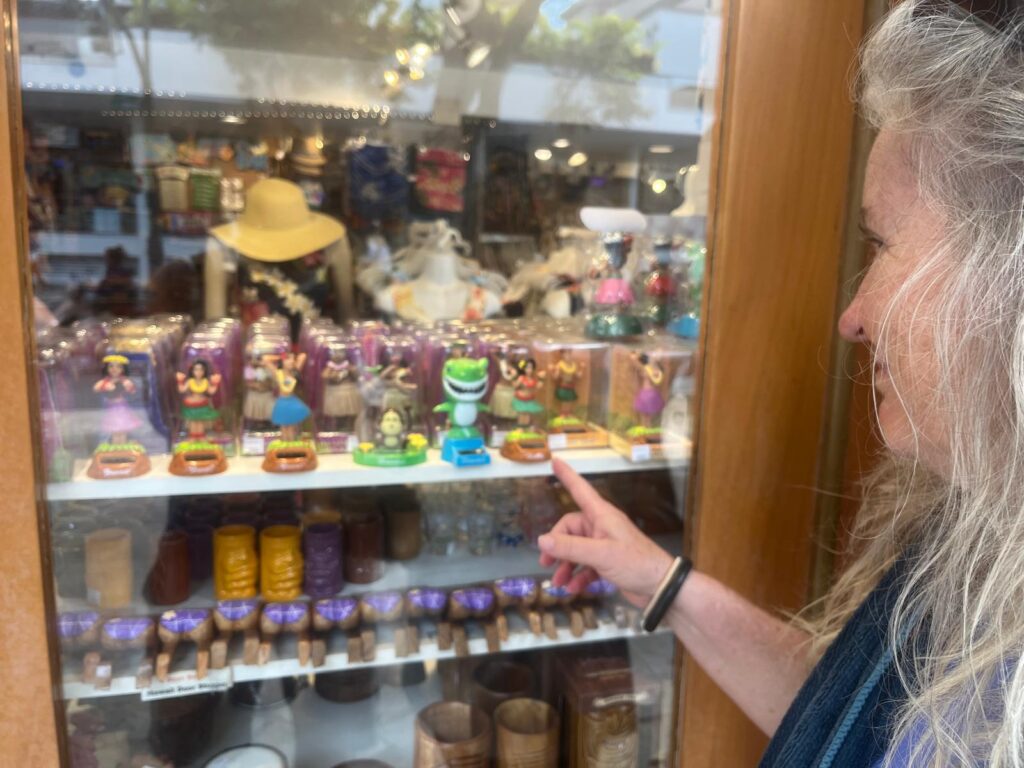
Walking past the tourist souvenirs, I see hula dolls packaged as wiggly dashboard trinkets. But I now understand the origins of hula as the ancient storytelling dance of the Hawaiian Islands.