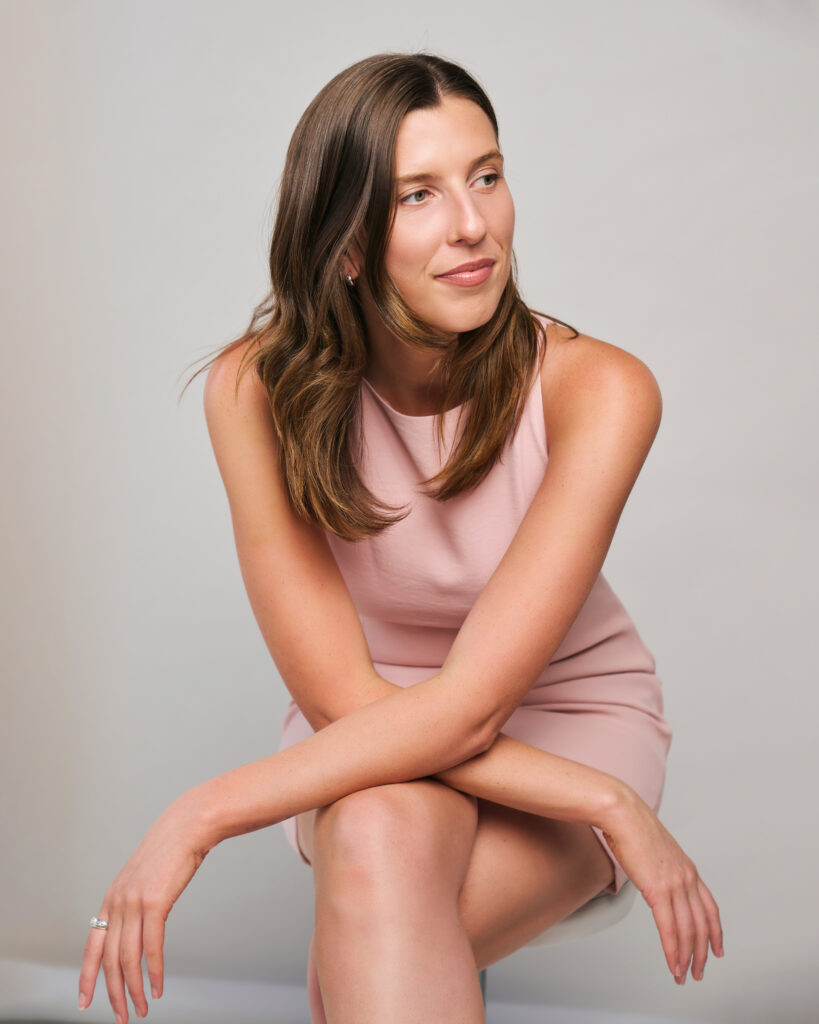
Once described as a “rebel medium”, podcasting is an increasingly crowded space. Sydney Observer chats with podcaster Hannah Ferguson about the successful formula for standing out from this crowd and the hours of effort it takes to sound effortless.
It used to be that strange default system app you couldn’t uninstall when you bought a new phone. I remember mine. It was a purple square with a satellite tower on it. It was annoying. And it ruined my screen congruency. Now, podcasts have kind of taken over the media world, which, kind of, is the world right now.
It’s certainly Hannah Ferguson’s world right now. As co-host of podcast Big Small Talk, which delivers “bold and progressive perspectives on subjects that capture the zeitgeist”, she spends most of her professional life in conversation, facilitating discussions and presenting on politics and culture.
With her partner in crime, Sarah-Jane Adams, the hosts can veer from Trump indictments to reality TV in a single sentence. It’s this dexterity, along with a healthy dose of authenticity, that has grown the show from humble beginnings in August 2023 to reaching 700,000 listeners each month.

Millennial and Gen Z women are their BFF listeners who keep coming back for more.
“When I speak to our audience, we always say we want our podcast to sound like you’re having a wine with some friends and that you’re hearing a good well-rounded political discussion that takes young women’s views seriously – that’s always what we are trying to achieve,” Hannah says.
“But you almost undermine your own craft when you say ‘it’s just like having a wine with a friend’ because we have worked hard to make it feel comfortable and seamless. It takes a lot!”
Hannah says while the pair aren’t claiming to be journalists, a consistent quality podcast involves “relentlessly researching” – and that’s before the hours spent recording.
“Podcasting means being switched on for hours. You can’t mess up a word or a name. That can get quite stressful when you’re bulk recording, for example, an examination on the Iraq war. That’s a lot – it’s really intense,” she says. “I don’t want to undermine what it takes to be successful in such a saturated market.”
Prior to the democratisation of information via the internet, those working in traditional media (television, radio, print such as newspapers and magazines) were respected and listened to. The medium was the vetting and only a select few were given access to that pulpit. But now, even your mate Jim has a podcast, and Jim’s vetting process consists of wi-fi and the digital literacy to press the start and stop recording buttons.
Hannah agrees that while the market is saturated and almost anyone can have a podcast, she explains that in many ways this has democratised the news and who is allowed to tell stories. And the podcast format, its freedom and unboundedness, is a huge part of why the medium thrives.
“We get to show our personality and show how our personal lives relate to what we do, but we are also taken seriously and can have longer-form discussions where it’s not expected to go down one avenue. We are allowed to do it all in podcasting.”
“The format is not a drawback, it’s allowed to take on any form it wants and that’s actually more diverse than legacy media,” Hannah adds. “But because there is so much on offer, people can get really tribal in their consumption. If people listen to two podcasts by women who represent their exact demographic and don’t get outside of anything they disagree with, you’re getting a narrow view.”
It’s a key reason Hannah avoids the echo chamber, which could inadvertently affect Big Small Talk’s content and, in turn, its authenticity in offering views on weighty political and cultural ideas.
“This is probably not what I should say, but I don’t listen to podcasts. The only podcasts I listen to are specific long-form interviews I want to listen to. I’ll engage in a one episode, three-hour interview.
“Or if I am going to speak about another podcast, I will listen as research. Like, if I want to critique [US podcaster] Joe Rogan, I’m going to need to listen to his whole two-hour podcast before doing that.”
She particularly steers clear of consuming podcasting content that is in the realm of theirs. “When you listen to podcasts with opinions that swirl in and out of what you talk about personally, it’s hard to then go, ‘Well, what is my opinion?’ It’s hard to step back and say, ‘Am I naturally forming an opinion or being driven by the influences and outside commentators I respect or am competing against?’
Another difficulty can be getting listeners to stay the course in a media environment of short-form online content and increasingly short attention spans. Indeed, the medium creates a rod for its own back in the way it is distributed.
“People take soundbites, people take clips, and that’s how podcasts are distributed on Instagram and TikTok,” Hannah says.
That’s probably where the relaxed ‘having wine with a friend’ USP offers an advantage. Asking their listeners of predominantly young women to stay with them during long, heavy discussions on political subjects is a big ask. So keeping it real with a friend – and throwing in a few Zayn Malik claims that he was never in love with his ex Gigi Hadid – makes talk about the Liberals’ spill more, um, digestible. As easily digestible as a glass of fine wine.
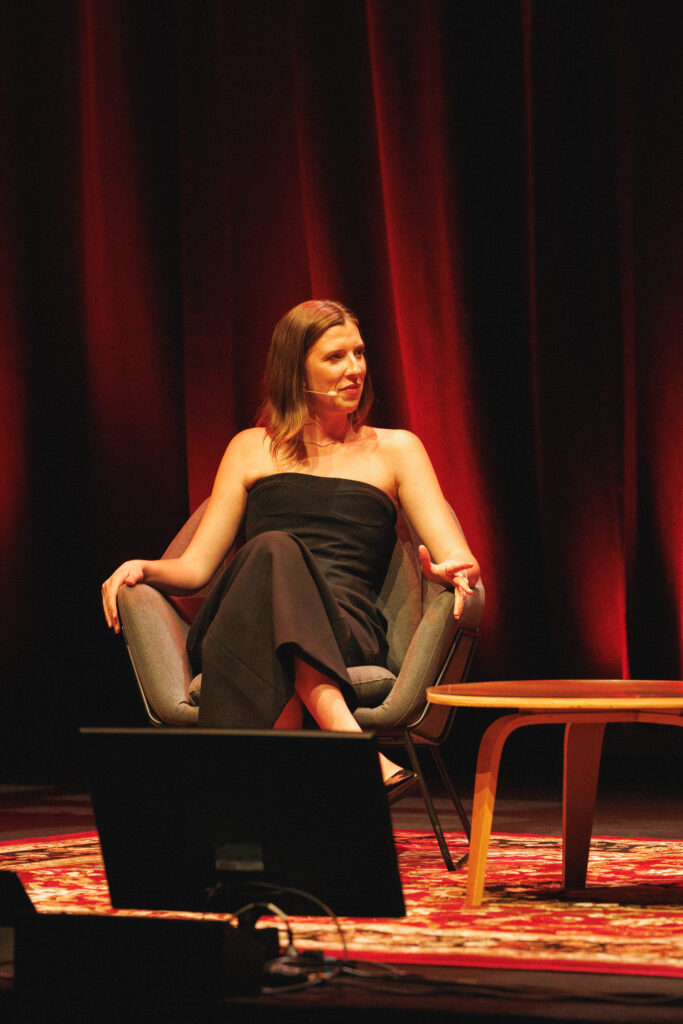
Hannah will be participating at DomeFest – Australia’s first-ever podcast fan festival – and the first event of its kind to bring podcast fandom into a live, festival-like experience. Taking place on 29 March at Sydney’s Hordern Pavilion, DomeFest will unite four of Australia’s most influential podcasts for Gen Z and Millennial women for a full day of live shows, music and community-led experiences. Secure tickets at https://thehordern.com.au/event/domefest/.