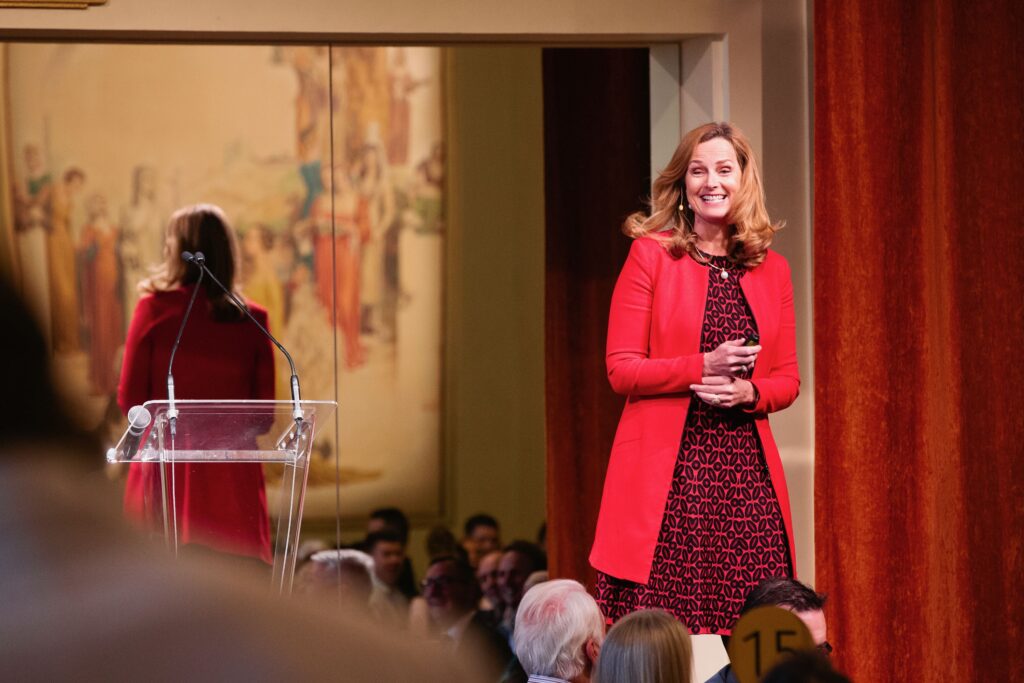
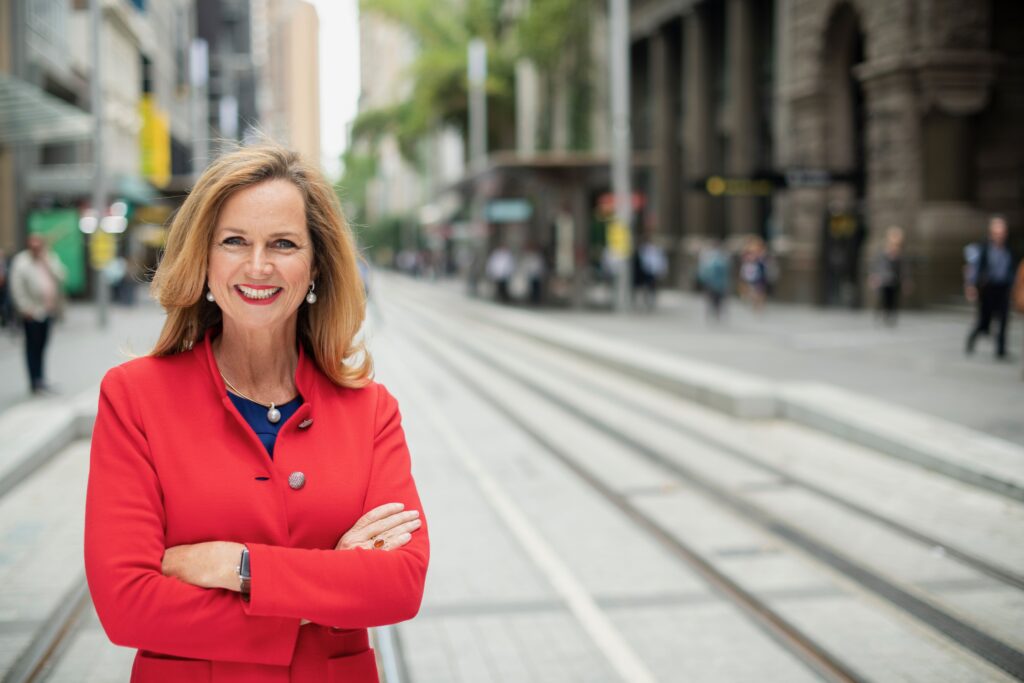
Business leader Naomi Simson is a familiar face – be it on Australia’s Shark Tank or as founder of experience platform Big Red Group. As a well-known entrepreneur and mentor to local startups, Simson shares her advice with Jay Houhlias on how businesses can get on the fast-track to success.
After a start in corporate marketing for global brands such as IBM and KPMG, Simson founded RedBalloon, an experiential gifts retailer, in 2001 from her home in Balmain and a $25,000 personal investment. So is building a company from the ground up harder in Australia than anywhere else?
The US ecosystem runs on abundant venture capital and a culture that celebrates swinging for the fences. The UK has deep institutional networks and proximity to Europe. Australia, by contrast, has a smaller, more intimate start-up community – which means you can get in front of the right people faster, build a reputation quickly, and get genuine feedback from customers without all the noise.
The biggest advantage Australians have is that we are forced to be resourceful and to build businesses with real fundamentals – customers who pay, margins that work, products that genuinely solve problems. We can’t paper over the cracks with cheap capital. The flip side is the “tall poppy” culture can make us timid about claiming our success, and we sometimes lack the ambition to think bigger sooner. My advice is to use the Australian market to get sharp — test ruthlessly, know your customer deeply, build something truly excellent – and then carry that discipline into whatever market you take on next.

In 2017, Simson co-founded Big Red Group, now a leading Australian technology business and the largest experience network in Australia and New Zealand. It includes e-commerce platforms like her own RedBalloon, Adrenaline and Experience Oz, and connects over 3500 experience operators with millions of customers globally. So should Australian startups go global?
The old adage that “Australian startups must go global because the market is too small” is still broadly true, but in 2026 the meaning of “global” has fundamentally shifted. Today, a brilliant founder with the right product can have international customers from day one without ever buying a plane ticket. So the question has moved from whether to go global to how quickly and which market first. The right time to expand is when staying local feels like the bigger risk.
Simson is known for being one of the original ‘Sharks’ on the first four seasons of Shark Tank Australia, where she backed and invested in numerous startups while establishing herself as a strong supporter of Australia’s entrepreneurial and small business sectors. So what qualities do you need for success?
People often expect me to say I look for people with a perfect résumé and a LinkedIn full of impressive titles. But the truth is, the thing I’ve always hired for first is curiosity – a genuine, restless desire to understand how things work, why customers behave the way they do, and what could be done better.
You can teach almost any technical skill. You cannot teach someone to be genuinely interested in the world around them. The second thing I look for is what I call “emotional range” – the ability to hold both optimism and pragmatism at the same time. Business is hard. Things go wrong constantly. I want people who don’t catastrophise, but who also don’t pretend problems don’t exist.
For applicants trying to distinguish themselves: stop telling me what you’ve done and start showing me how you think. The candidates who stand out in any interview I’ve ever been part of are the ones who’ve clearly done the work – who know the company, who have thought about the actual challenges we’re facing, and who come with a point of view. Ask insightful questions. Demonstrate that you’ve listened to the podcast, read the reports, spoken to a customer. In a world where AI can generate a polished cover letter in 30 seconds, genuine intellectual engagement is more valuable than ever. That’s what I’m looking for – someone who showed up before they were asked to.

As a business influencer with over 2.6 million followers on LinkedIn, Simson knows what it takes to build a community, business and long, healthy career – it’s more a marathon than a sprint. And that’s something the often young and inexperienced entrepreneurs who pitched on Shark Tank Australia would seek. So what would Simson say is the greatest predictor of long-term success based on her ‘time in the tank’?
After four seasons and hundreds of pitches, I can tell you with certainty: it is never the idea. I’ve seen extraordinary ideas pitched by founders who didn’t have what it takes to execute, and I’ve seen very ordinary ideas built into exceptional businesses by founders who simply refused to give up. The greatest predictor of long-term success is the character of the founder – specifically, how they respond when things don’t go to plan. And things always don’t go to plan. The founders who succeed are the ones who can hear brutal feedback, integrate it quickly, and come back stronger.
The second thing I look for — and this one is subtler – is whether the founder is obsessed with the customer’s problem or obsessed with their own solution. These sound similar but they produce completely different companies. When I started RedBalloon, I wasn’t married to any particular execution; I was obsessed with shifting the culture of gifting in Australia from things to experiences.
That customer-obsession meant I could pivot, adapt, and grow as the market changed, because my north star was always the person I was serving, not the product I happened to be selling. The founders who hold their idea loosely and their customer tightly – those are the ones I want to back.
With business owners grappling with the impact of global events that are not in their control as well as rapid change and a local cost-of-living crisis affecting consumers, what would Simson suggest that businesses prioritise in 2026?
The single biggest factor I tell every business owner to engage with right now is AI – not as a fear and not as a buzzword, but as a practical operational reality. At Big Red Group we’ve been embedding AI into how we work for a few years now, and the productivity gains are not marginal. They’re structural. Entrepreneurs who treat AI as something to defer until they “have time” are already falling behind.
That said, I’d push back hard on the idea that you should take your eye off the local game. Global disruption – whether that’s geopolitical uncertainty, supply chain fragility, or the shifting cost of capital – tends to hit distant markets first and closest communities last. There is enormous power in being deeply embedded in your local market, knowing your customer better than anyone else, and building genuine loyalty.
The businesses I’ve seen weather every economic storm share one thing: they are obsessively focused on the customer in front of them. Get that right first. The macro environment will always be unpredictable — your customer relationship is the one thing you can control.
Simson has been using AI for years with great results. So how does she balance AI automation with human oversight in financial decision-making?
My position is pretty clear: AI is extraordinarily good at processing information at scale, identifying patterns, and reducing the time humans spend on low-value analytical tasks. In that context, using AI to assist with financial decisions – flagging anomalies, modelling scenarios, accelerating data review – is not just sensible, it’s responsible governance.
Use AI to do more with less, but keep a human in the room who understands the customer, carries the values of the business, and can ask the question the algorithm never thought to ask. Technology should amplify human wisdom, not substitute for it.
The real risk is not AI – it’s slow, uninformed human decisions made without good data. But I draw a firm line at removing human judgment from consequential decisions. AI should inform and accelerate the thinking of experienced humans, not replace it. The moment you outsource accountability – whether in credit decisions, investment choices, or strategic calls – you’ve also outsourced the ability to course-correct when the model gets it wrong, and models do get it wrong.
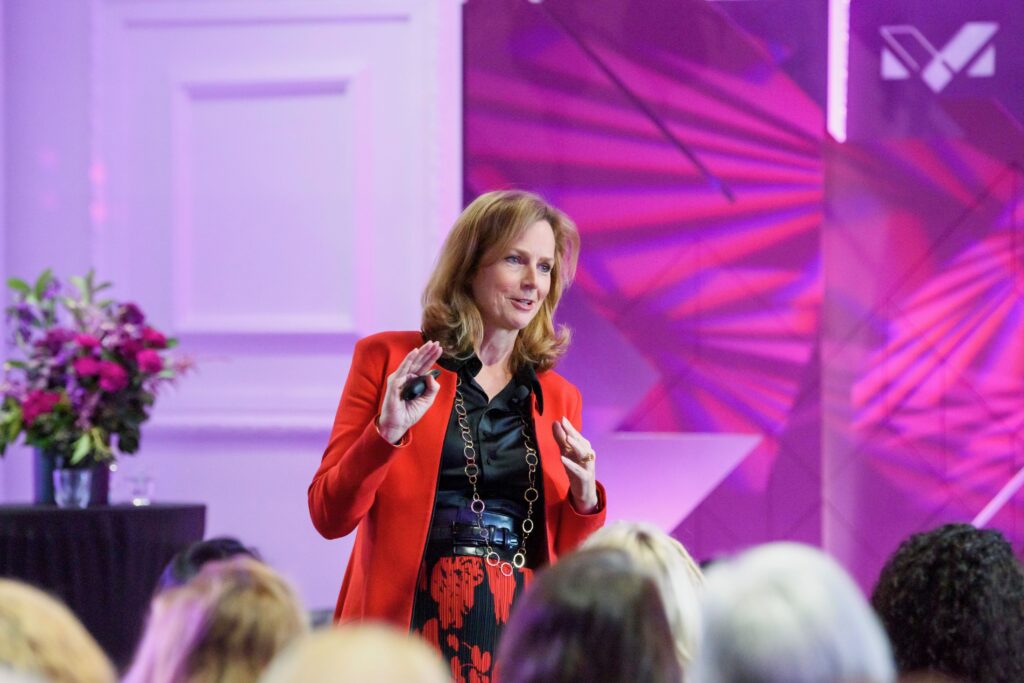
Simson’s books Live What You Love (2015), and Ready to Soar (2016) both include her frank and fearless business advice. However Live What You Love is also a more reflective, self-help book. So wrapping up with a reflective hypothetical – what would you do if you were fresh out of high school today, with no debt and no responsibilities?
What a glorious position to be in! Honestly, if I were 18 today, the first thing I’d do is build a genuine skill – not a credential, a skill. Something I could actually do for someone that would create value. Something tangible. Because in the creator economy, the people who win are the ones who can produce something of genuine worth, not just talk about it.
I’d also spend time working inside an excellent business before trying to build my own. I learned more about marketing at Apple and IBM than I could have learned in any classroom, because I was watching real decisions being made with real consequences. Watching others run businesses – that education is priceless.
I’d also – and this is the bit most young people skip – build relationships with interesting and diverse people; a real community who trust each other. And I mean in real life – not relying on social media feeds and algorithms. In saying that, having an opinion and being prepared to share it matters enormously. The relationships you build – online and off – are an asset that compounds over time in a way that almost nothing else does.