
The headlines have moved on to falling prices. Mike Kaye, co-founder and director at Sarah Kaye & Co Buyers Agents, says the honest picture is a calmer market on both sides and an undetermined price story.
When we wrote here last month, the May Budget was barely a week old, and most of the coverage treated it as the only thing happening to Sydney property. My view then was that it was a real structural reform, but not the biggest force on Upper North Shore prices over the next year or so.
Weeks on, with more market reaction visible, that view hasn’t changed. The picture has simply filled in.
First, the reassuring part, because it still holds.
If you own the home you live in, little has changed. The family home exemption is untouched – negative gearing is never applied to an owner-occupied home – and the reforms that do bite, for investors in established property, don’t start until July 2027. For most households between Lindfield and Hornsby, the Budget remains background noise. What has changed is the market’s tempo on both sides.
Buyers are still here – but they’re taking their time
While, overall, buyers are as active as ever, investors have stepped back. That part of the market thinned the moment the rules changed but home buyers, the people buying a place to live, are still active. What’s different is the pace. With less competition and more to choose from, buyers no longer feel they have to decide over a single weekend. They are doing the building inspections, reading the contracts properly, and walking away from the wrong ones.
The data backs the feeling. Across seven Upper North Shore suburbs, homes are sitting longer on the market – most sharply in Roseville, Turramurra, Pymble and Lindfield. Buyers can afford to wait.
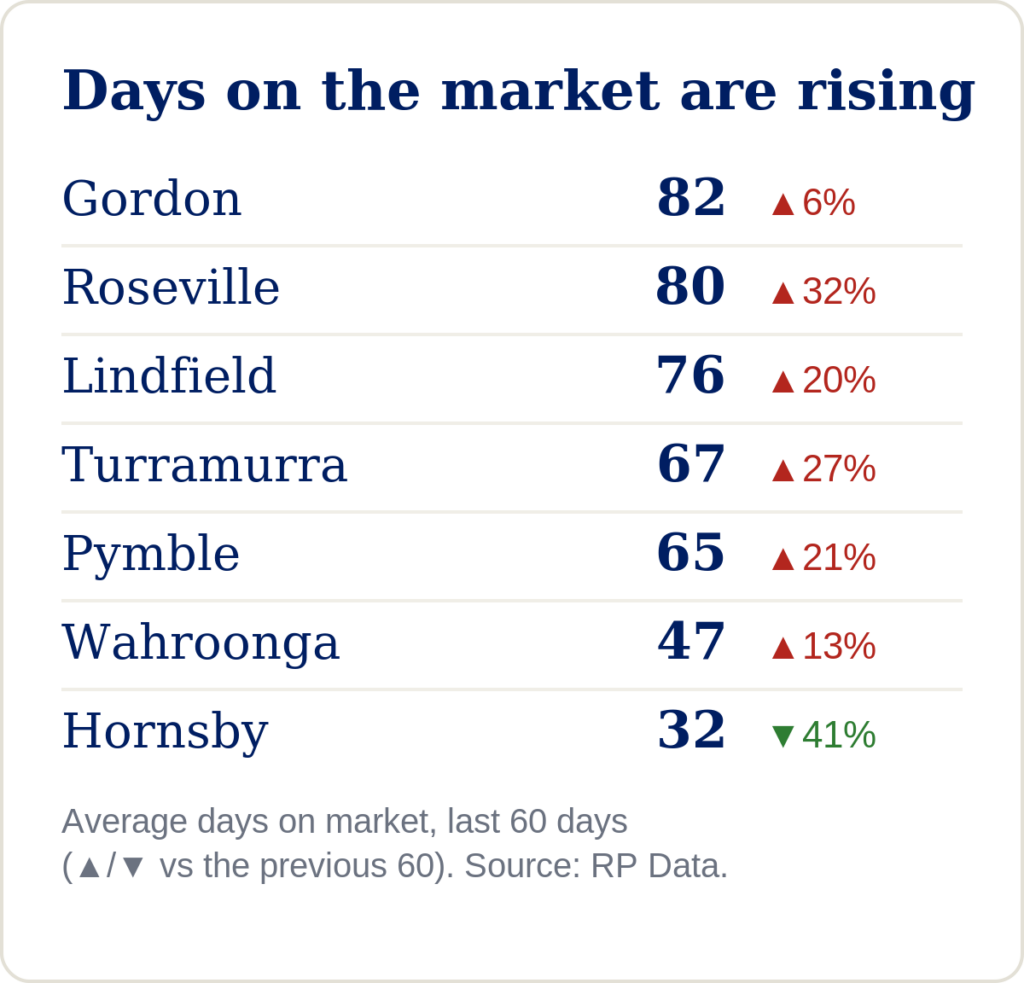
Sellers are being deliberate too, with fewer listings
Owners who don’t need to sell are choosing to wait rather than test a quieter market. Where homes are listed, expectations have eased and there is more room to negotiate.
Two suburbs run against the grain — Wahroonga and Hornsby, where listings actually rose. Hornsby is the one to watch: it is the affordable end of our patch and it is where first-home buyers and downsizers are absorbing the more accessible stock. It tends to march to its own beat. One thing the listings figure misses entirely: a good deal of the strongest stock never reaches the portals. Many homes are secured off-market, and that has stayed busy. So ‘fewer fresh listings’ tells only half the story of how much is really trading.
What the coverage can’t tell you
The Valuer General’s settled-sales record – every registered transfer in our area – shows no clear trend for Upper North Shore prices. But settled data lags the market by about 8 weeks, so it simply cannot yet capture the period since the Budget.
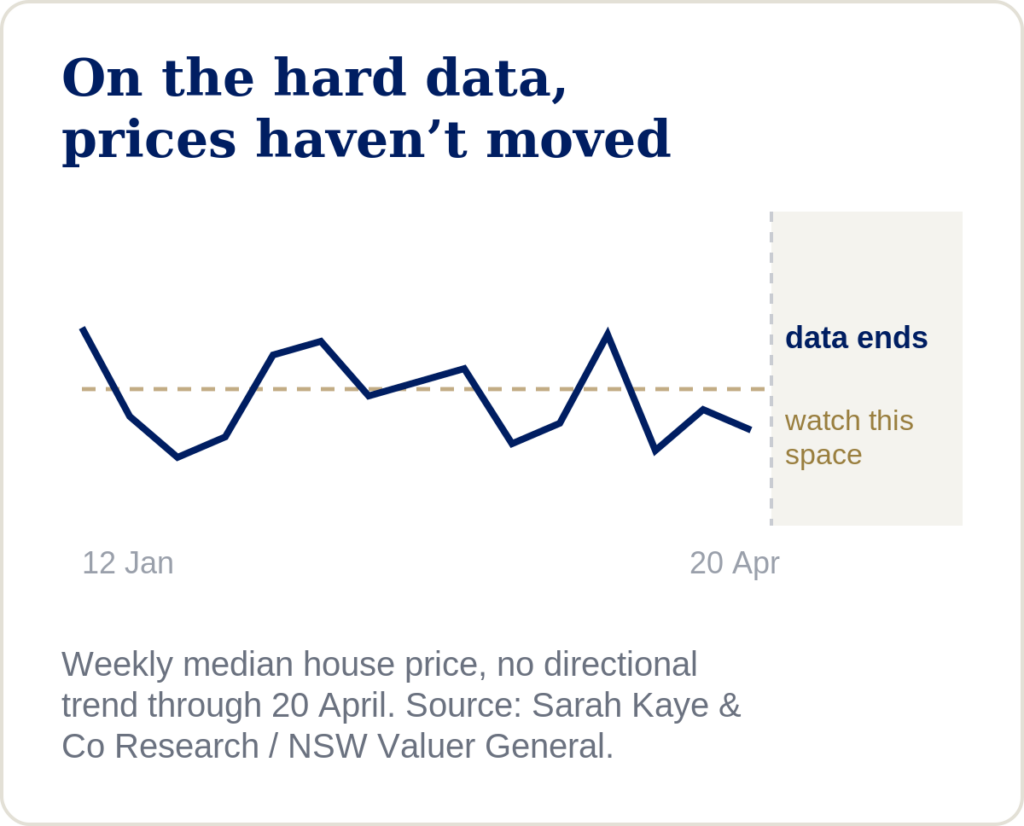
Our read, with the clear caveat that it is not yet in the numbers, is that prices are around 5% below where they would have been three months ago. We don’t expect much further softening this calendar year – our sense is that the adjustment has largely been made – and even that 5% cannot be pinned on the Budget alone. The cash rate, elevated oil prices, construction costs and the weight of household debt have contributed to downwards pressure.
Lean on reliable data, not clearance rates
Give auction clearance rates little weight because they swing on which auctions get reported as sold, passed in or withdrawn, and when. The signals to trust – days on market, the flow of new listings, and the Valuer General’s median prices – rest on broad, near-complete data rather than a self-reported sample. They are less exciting but more reliable.
Upper North Shore renters to feel modest pinch
Renters on the Upper North Shore are likely to feel some pressure: new arrivals keep entering the rental market, local rental stock is structurally tight to begin with, and a thinner investor pipeline over the next couple of years won’t help. We’d put the likely effect modestly, not the spike some predict.
So, what should you do next?
Stay calm, mostly. If you are buying a home to live in, the conditions have quietly tilted in your favour – less competition, more time, a little more give on price – and the tax position on your own home is unchanged. If you are weighing an investment, the timing question is real and worth proper advice before you commit. Either way, the worst response to a noisy month is a rushed one.