By Jay Houhlias
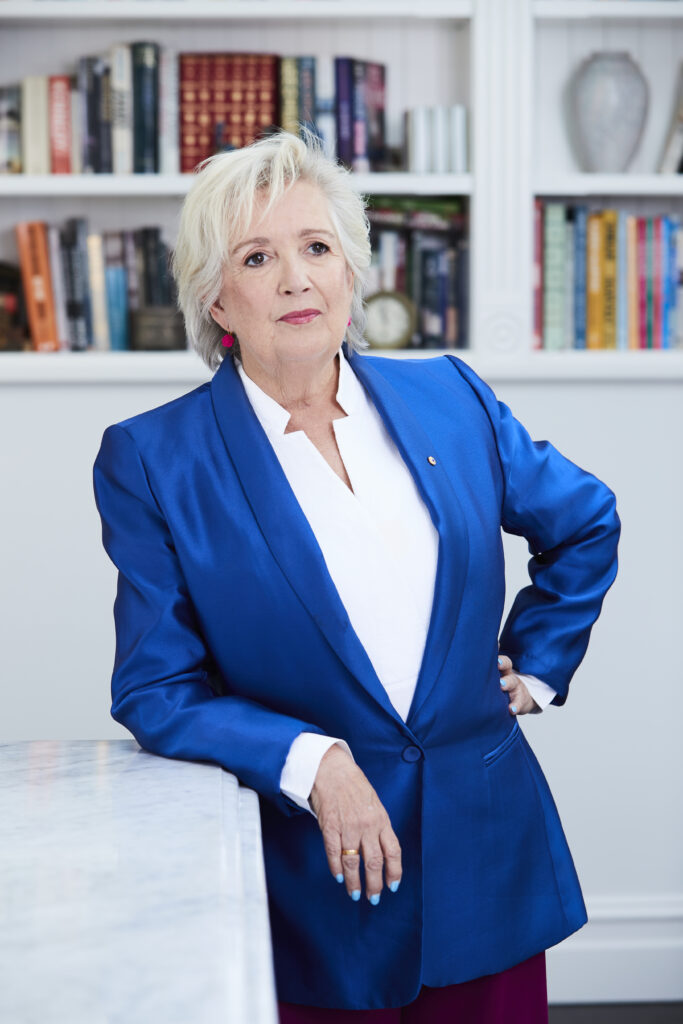
Jane Caro has worked across just about every conceivable information medium. If it’s done with words, it’s been done by Caro. She began her career as an advertising copywriter, but since then, she has been working her way through the job titles, all the job titles. Speaker, columnist, author, novelist, essayist, copywriter, activist, social commentator, media pundit, Caro has lent her thoughts on a range of subjects – with wit, biting critique and impactful analysis.
Caro doesn’t pick favourites. She says all forms of communication are “compelling and interesting, that’s why I do them. The fiction is the hardest and most time-consuming but ultimately the most satisfying as I get a chance to work through what I find compelling in long form and in my imagination”.
“The panel shows are mostly fun and give me a chance to engage in the public conversation. My columns and essays give me a sense of purpose and contribution. I can’t really pick,” she adds.
Caro has won both the Walkley Award for Women’s Leadership in Media (2018) and the B&T Women in Media Lifetime Achievement Award (2023), as well as published five novels, with the most recent being her 2025 thriller Lyrebird.
She says the two forms of storytelling, journalism (with its more analytical research focus), and fiction (with its creative left-brain focus), don’t tread on each other’s toes.
“If they do require different mindsets, I have not noticed it. I just tell the story I want to tell. In an article or essay, that story will be supported by evidence and facts. In a novel, it will be supported by my observations, reactions, research and the magical, unquantifiable thing that happens when you get on a roll.”
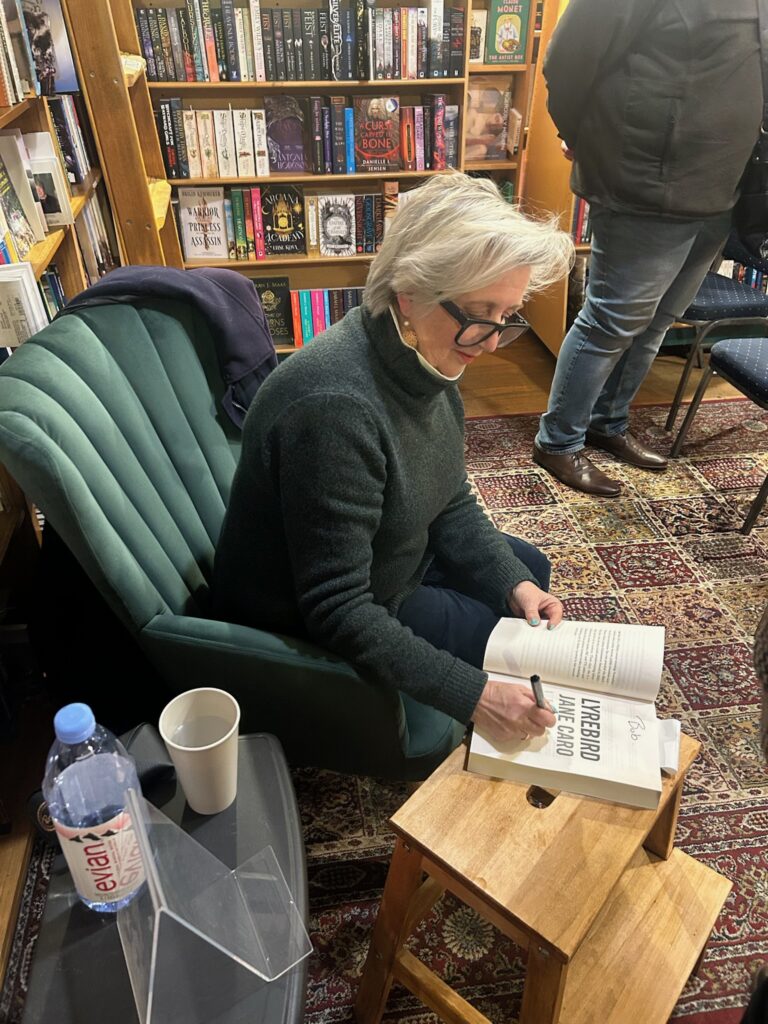
Caro adds that writing novels has reawakened her creative side and enabled her to “roam widely”. “They have taught me new skills and vastly improved my writing skills. The reactions of readers have been very fulfilling. [The novels’] success has given me the confidence to take more risks creatively, and that flows into all the other things I do.”
Caro is a rarity in that she sits on both sides of the couch, with journalists interviewing her and picking her brain, and she herself interviewing artists and picking their brains. She believes communicators on both sides now need to be flexible and adaptable. The density of information and its many, ever-growing mediums need to be understood in their different forms in order to achieve cut-through with overwhelmed, information-overloaded audiences. We can’t, she says, “rely on one thing anymore”.
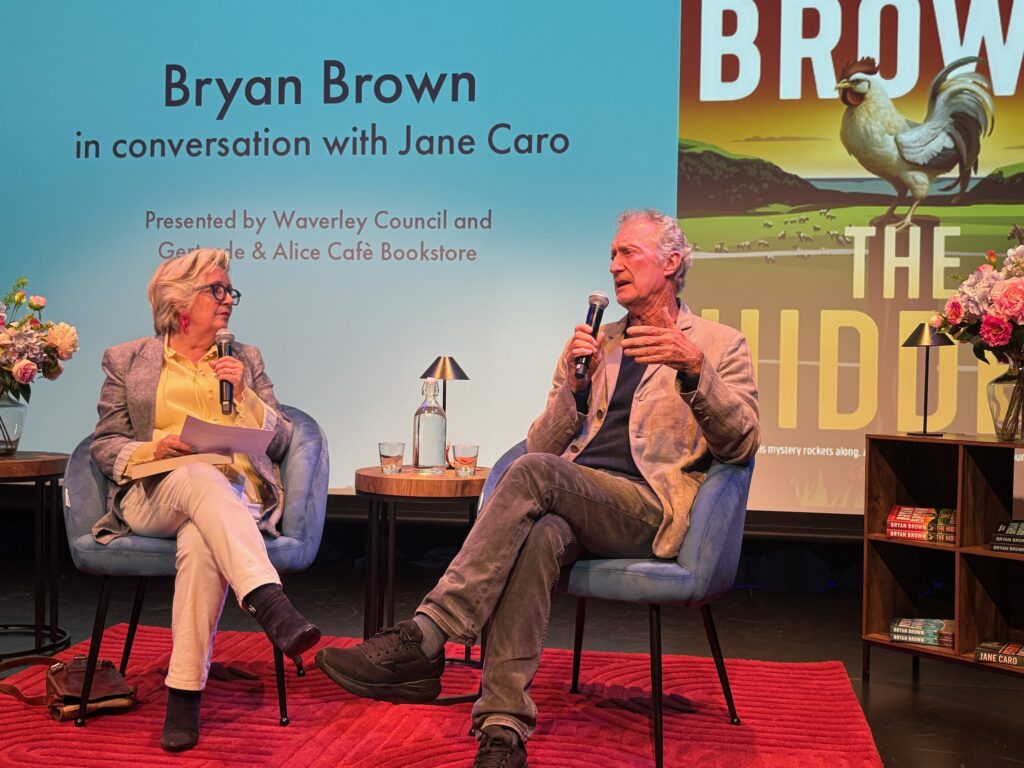
“If you want to have influence, if you want your voice to be heard, I think you have to participate in a suite of mediums. Books are still the most prestigious medium. You are taken more seriously if you are an author, especially a novelist. Articles and columns can cut through, but their influence tends to be ephemeral. Panels and media interviews are the most ephemeral of all.”
Even with a range of efforts, Caro suggests not much holds up: “I think almost everything has a short shelf life these days. Even if something goes viral, it’s HUGE for a few days maybe, then gone.”
Education always been a focal point of Caro’s work, particularly differences between private and public education, but Caro has recently been more outspoken and ardent about how different forms of communication are affecting learning.
“Life-long learning is a wonderful thing and something human beings do whether consciously or not. What is essential, however, is the ability to think critically when information comes at you, from whatever source,” she says.
“Formal classroom-based learning must teach students to ask questions such as: how credible is the source? Does this fit with my previous knowledge? What is the aim of this information? Is it to enlighten or enrage? Who benefits from communicating this information? What is it asking me to do, think or believe? Does that sit comfortably with my values?”
And can these mediums ever fully replace a school education? Caro’s answer was simple: no.
“Education is not just about learning facts and following a curriculum. It is about getting to know your peers, away from the watchful, loving but biased eyes of your parents. Good schools should help children to become themselves, not little carbon copies of their parents. In school, we learn about peer relationships, relationships with authority figures who – while kind – do not love you.
“We learn to deal with conflict, hurt feelings, peer pressure, friendship, and how to navigate an environment we cannot control. How to obey rules, how to challenge them, how to break them. We learn we are not special or unique, just one of many, and that no one is any more or any less important than anyone else. No machine-based learning can ever replace all that.”
We then spoke the unspeakable word, privilege, and how it has informed Caro’s ability to speak out about societal injustice, particularly in education. For Caro, privilege is not unspeakable at all; it’s simply a fact.
“I am a middle-class, straight white woman born into a comfortably off, highly educated family. Talk about winning the lottery. Then we migrated to Australia! Even better luck,” she says.
“My parents were very clear about the privilege my siblings and I enjoyed. Their point of view was that privilege carries obligations, particularly the obligation to recognise how lucky you are, rather than how richly you deserve your relatively easy life.
“We were brought up to try and spread privilege as widely as possible, not clutch it tightly to ourselves. We were also taught that privilege makes you safer, therefore, it was our obligation to take risks and speak up when we saw injustice.
“I remember my mother saying that if – with all our privileges – we couldn’t thrive in the ordinary local public school, what the hell was wrong with us? It was our responsibility to take our opportunities and make the best of them. If we didn’t, it was our problem.”
Caro says the idea that the only people who are allowed to speak up on behalf of those with less must be those with less themselves is a “really neat way of making sure few people ever will”.
“I believe the exact opposite. I don’t care how hard you think you’ve worked; no one got anywhere on their own. It is always the obligation of those with more to do what they can to make sure others can get more too.”