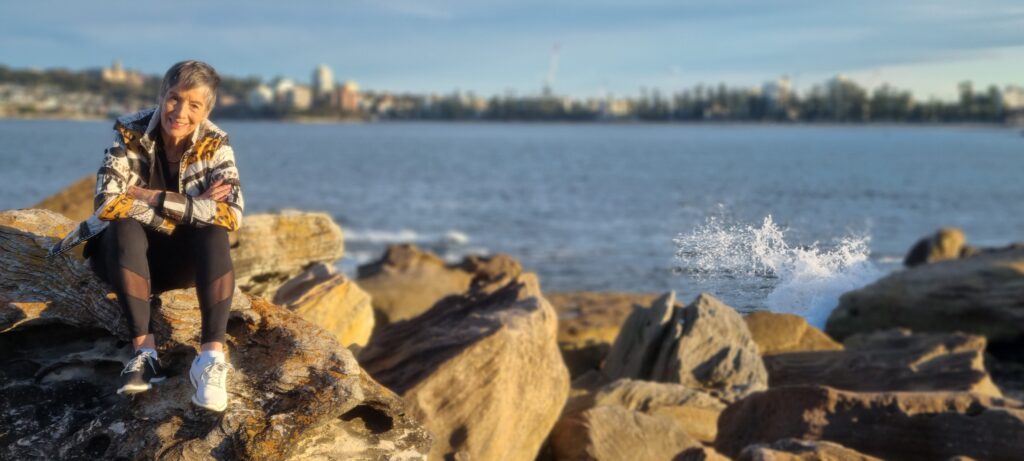
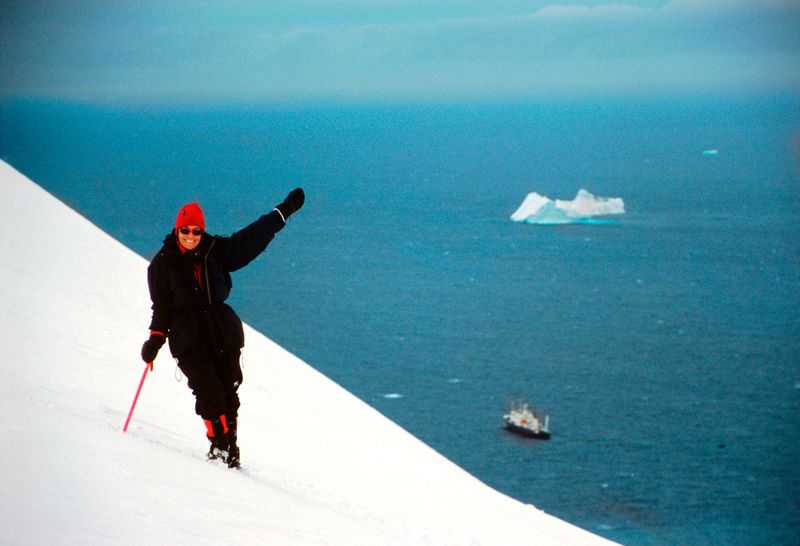
Looking at Catherine DeVrye’s photos, they seem unreal. Almost like someone photoshopped her into these extraordinary places. Far from the far-flung countries chronicled in her newly released book, Beyond Timbuktu: Journeys of Hope and Humanity, we caught up with the best-selling author, twice-awarded Australian Keynote Speaker of the Year, carrier of the Olympic Torch at the Sydney Olympics’ opening ceremony and Australian Executive Woman of the Year at her home in Freshwater.
Growing up on the so-called ‘wrong side of the tracks’ in Calgary, Canada, DeVrye started working odd jobs at 13. At 22, she moved to Australia with $200 and no return journey.
She made the move after her parents’ death, and being an only child, she chose faraway Australia because her best friend just happened to be teaching in Melbourne. Upon reflection, she says,
“If my parents were still alive, I’d probably still be teaching back in Canada. Who knows?”
DeVrye says candidly that she never consciously considered the move as courageous.
“When my parents died, I was an absolute wreck. I did it to clear my head. It wasn’t a rational decision in many ways, but the biggest problem turned into the biggest opportunity,” she explains.
The move eventuated into an international career with IBM and her status as one of Australia’s best-known keynote speakers. DeVrye’s story requires a book in itself (which she has already published – her 2005 memoir, Who Says I Can’t?, was nominated for the National Biography Award) but these days she happily characterises her professional identity as author and speaker.
During her career-building phase, however, DeVrye seemed to effortlessly, and in a perfect trajectory, pinball from one thing to the next. But she says there wasn’t magic behind the career moves.
“I just took the opportunities,” she explains.
“It sounds like a cliché; I had this boss who said, ‘the opportunity of a lifetime has to be grasped within the lifetime of that opportunity’. I am a bit of a planner in some ways. There are a lot of opportunities I’ve missed but, mostly, if something has felt right, I’ve just done it. Right time, right place, then just gone for it.”
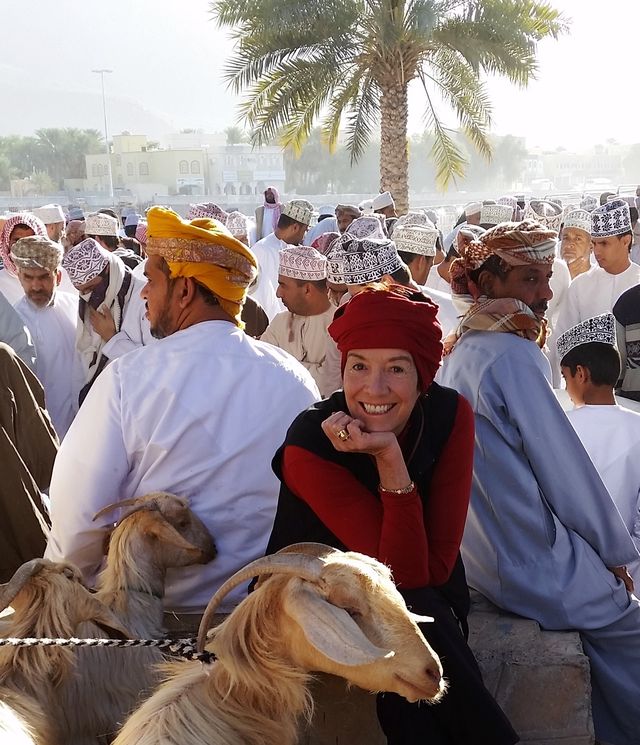
DeVrye has (so far) published 10 books, with Beyond Timbuktu: Journeys of Hope and Humanity, detailing her adventures in off-the-beaten-path countries from Albania to Zimbabwe. It’s full of true stories of ordinary people showing extraordinary kindness in some of the world’s least-known places.
Speaking with her is also an adventure in itself, every topic spiralling into 20 different stories and tangents but, interestingly, not into the realm of advice on how to inject more adventure into one’s life. DeVrye did, however, offer this: “Do what you want to do as long as it doesn’t hurt anyone else. Also, if you’re in doubt, do it! If you’re not sure about it, do it!”
DeVrye refers to the comfort zone and the courage zone, a different framing on being outside of one’s comfort zone. She goes on to say she personally feels more alive when she travels, but also says, “other times, it’s quite nice to be inside your comfort zone.”
Rather than offer blanket statements, it seems important for DeVrye to ensure there is room for nuance – even when making distinctions. When we met, for example, she sported one white and one black shoe to show “life isn’t black and white”.
So despite her adventure-filled life, DeVrye doesn’t believe it’s obligatory for fulfilment.
“People are different, and some people are very happy where they are and don’t need adventure. Maybe we even lead a less fulfilling life when we go off and have adventures,” she says.
“My first trip to Australia I went hitchhiking in Tasmania. I met this old farmer and he’d never been to Hobart, and I’m going, ‘Are you crazy? It’s just down the road,’ and he said, ‘I have everything I need here, why would I have to leave?’ I can picture this guy. I thought, gee, he is so content with where he is.”
Sometimes the most unfulfilled people are the ones who have done the most travel, perhaps because they are still searching for contentedness, filling the void with more places, more experiences.
“Some people travel for adventure,” DeVrye says, “and some people travel to get away from things.”
It’s also clear the idea of authentic travel for DeVrye is actually about seeing locals in their element, completely content in their small and beautiful corner of the world. Rather than meeting other travellers, it’s about encountering the old Greek grandmother who has cut potatoes in her village for 60 years, or the Icelandic sheep farmer who lives by the seasons and hasn’t left the island.
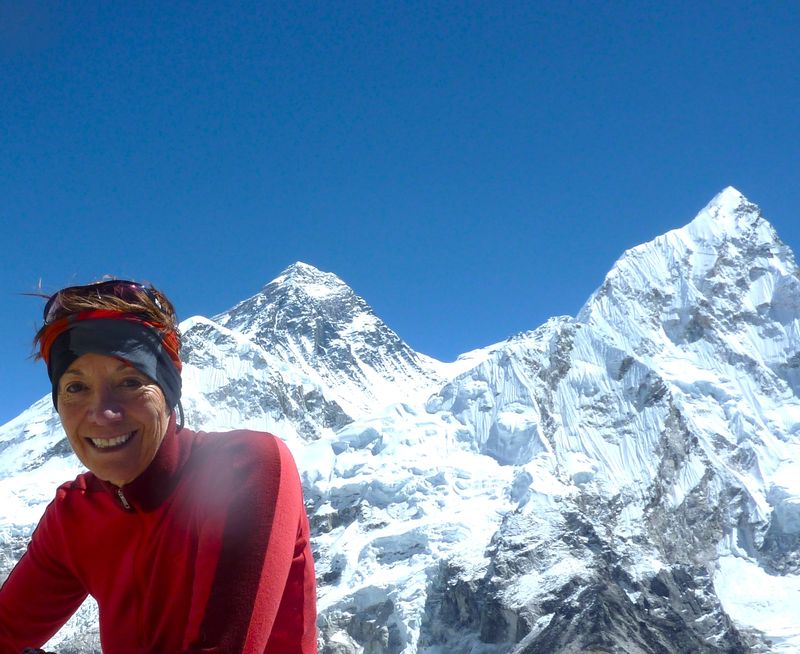
But the irony in all this, DeVrye concludes, is that despite vast differences in lifestyles, beliefs, values, virtues, people’s travel experiences (or lack thereof), we are more alike than different. It’s the crux of her latest book and the key lesson of her enduring travels: “It’s just about people.”
“I’ve been to over 150 countries and I’ve never met a ‘government’; I’ve only met people. I’ve met the leaders of some of these countries, but never a ‘government’,” she says.
“If you look behind the headlines, people are kinder than the narratives and the news cycle. I truly believe that (as I write in the book) Iran is the friendliest place I’ve been to. People would invite us to their home for dinner, they said ‘thank you for not believing the media and administrations’.”
DeVrye says she’s got her own political opinions “but that’s not the purpose of this book”.
“When I get asked questions about politics and policy, I often throw my hands up; it’s beyond my pay grade. I can’t comment,” she says.
“I don’t really write about the negatives, and if anyone accuses me of being overly optimistic, I don’t apologise because the mainstream media, by nature, are overly negative. So if I am overly positive, hopefully people will meet somewhere in the middle because, ultimately, that’s where most of us live our lives.”
Although one can argue Catherine DeVrye has lived a life anywhere but the middle, speaking at her home in Freshwater certainly is grounding. Walking past surfers and snorkellers, restaurant workers and families with their dogs on the rocks, we did not know anything about them – where they’d been or what they’d done. However, in a way, it didn’t really matter; we are all just people, and that’s good enough ground for all of us to meet on.